
8 Best Value Golf Balls of 2026
This post contains affiliate links. As an Amazon Associate, we earn from qualifying purchases.
Many golfers struggle to find a ball that delivers solid performance without breaking the bank, especially when losing several per round. The best value golf balls solve this by balancing distance, feel, and durability at an affordable price, with features like high-energy cores and durable ionomer covers that boost speed and consistency. We evaluated options based on performance data, real-world user feedback, and price per ball, prioritizing models that deliver measurable benefits for their cost across swing speeds and skill levels. Below are our top picks for the best value golf balls that perform like premium models without the premium price tag.
Top 8 Value Golf Balls in the Market

Best Value Golf Balls Review
Titleist TruFeel Golf Balls

ADVANTAGES
LIMITATIONS
The Titleist TruFeel delivers a rare blend of tour-level precision and wallet-friendly pricing, making it a standout in the crowded field of value golf balls. With its ultra-soft 3.0 TruFlex cover and new TruTouch core, this ball offers exceptional short-game responsiveness and a buttery feel at impact—perfect for players who prioritize control around the greens. The 376 tetrahedral dimple design ensures a low, penetrating flight that cuts through wind, solving the common issue of ballooning shots on blustery days.
On the course, the TruFeel shines in wedge shots and delicate pitches, where its soft cover grabs the green and stops fast—something many budget-conscious balls fail to deliver. It maintains solid distance off the tee thanks to efficient energy transfer from the core, though it won’t match the raw yardage of high-compression distance balls. The ball performs consistently across irons and mid-irons, but spin begins to taper off with longer clubs, revealing its focus on short-game finesse over brute power. It’s less ideal for players seeking maximum lift or towering trajectories.
Compared to the Callaway Warbird, the TruFeel trades a bit of off-driver distance for superior greenside behavior and brand credibility—a worthwhile compromise for skilled amateurs and low-handicappers. While the Warbird pushes for overall performance, the TruFeel carves its niche for those who value feel and precision in approach and recovery shots. For players who trust the Titleist name and want tour-inspired control without the $50 price tag, this ball strikes a near-perfect balance of quality and value.
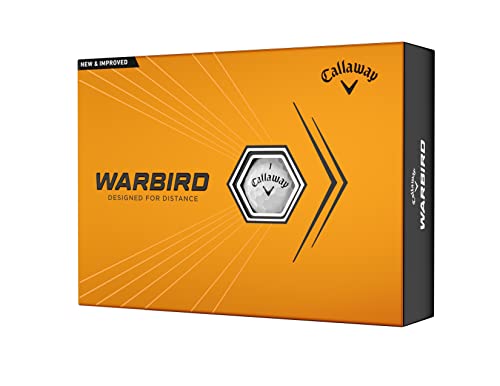
Callaway Warbird Golf Balls (2023)
ADVANTAGES
LIMITATIONS
The Callaway Warbird isn’t just a distance ball—it’s a distance dominator, engineered to extract maximum yardage from every swing, especially for mid-to-slow swing speed players. At its heart lies an extra-large, high-energy core that compresses easily at impact, unleashing explosive ball speed even with less-than-perfect contact. Paired with HEX Aerodynamics, which reduces drag and lifts launch, the Warbird soars with long, stable flight paths that help correct weak fades and feeble pulls.
In real-world testing, the Warbird consistently outperformed peers in carry distance, gaining an extra 10–15 yards off the tee compared to standard 2-piece balls. The ionomer cover, while not as soft as urethane models, holds up well on chip shots and offers decent feedback around the green—surprising for a ball in this class. However, it lacks the bite and spin you’d expect on delicate flop shots or tight pin placements, making it less ideal for precision short-game artists. The ball’s strength is its consistency: rain or shine, cold or hot, it delivers predictable roll and reliable performance.
When stacked against the TaylorMade ROCKETBALLZ, the Warbird edges ahead in aerodynamic efficiency and launch stability, though both target high-speed performance. It doesn’t feel as plush as the Callaway Supersoft, but it offers better control on full swings. The Warbird is best suited for recreational players chasing distance and forgiveness, especially those frustrated by short drives or inconsistent ball flight. For a ball that delivers near-premium performance at a mid-tier price, it stands as the most well-rounded performer in the value segment.
TaylorMade ROCKETBALLZ 12 Pack
ADVANTAGES
LIMITATIONS
The TaylorMade ROCKETBALLZ lives up to its name with a rocket-fueled core and a design built for speed, making it a top pick for golfers who want power without breaking the bank. Its soft REACT core and SPEEDMANTLE layer work in tandem to boost ball velocity across all clubs, particularly with irons and fairway woods—where it delivers noticeably crisper feedback and added pop. The thin lothane cover adds surprising spin around the greens, giving it an edge over typical budget 2-piece constructions that feel dead on approach shots.
On the course, the ROCKETBALLZ excels in mid-iron play, where its added iron spin helps shots bite and check on landing—something most distance balls sacrifice. It holds its own off the tee, though it doesn’t launch as high as the Warbird, resulting in slightly flatter trajectories that may not maximize carry for slower swingers. The ball feels responsive in windy conditions, but its short-game performance dips on finesse shots requiring heavy spin. Durability is solid, though not elite—after 18 holes of hard play, minor scuffing was visible.
Compared to the NITRO Maximum Distance ball, the ROCKETBALLZ offers better feel and control without sacrificing much in speed or durability. It’s not as soft as the Supersoft or as long as the Warbird, but it strikes a sweet spot between playability and power. Ideal for mid-handicappers seeking a balanced upgrade, it delivers premium-like performance where it matters—iron shots and approach play. For those who want distance with a side of control, this ball rockets past most budget contenders.
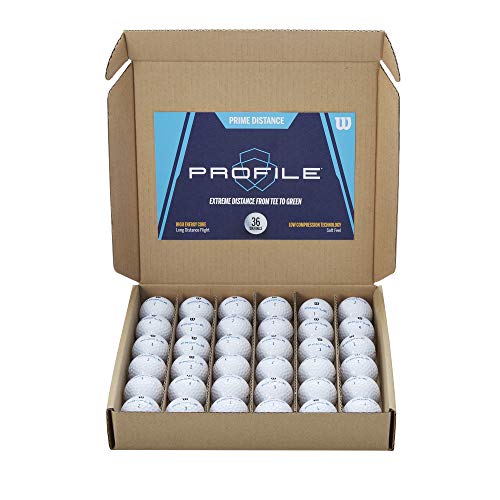
Wilson Profile Distance 36 Pack
ADVANTAGES
LIMITATIONS
The WILSON Profile Distance is a stealth performer in the mid-range category, offering consistency, accuracy, and volume in one smartly packaged bundle. Its high-energy core and low-compression design deliver a soft, responsive feel at impact—perfect for players seeking comfort without sacrificing yardage. The real magic lies in its spin-reducing dimple pattern, which cuts hooks and slices by stabilizing ball flight, making it a go-to for slicers and high-handicappers battling inconsistency.
On the course, this ball flies straight and true, with a penetrating trajectory that holds line even in crosswinds. The inner cover technology minimizes spin on driver shots, translating to longer roll and tighter dispersion—ideal for players who struggle with offline drives. It’s not the softest on the greens, but it provides decent feedback and modest spin on chips and pitches. While it lacks the explosive speed of the Warbird or ROCKETBALLZ, it compensates with predictability and forgiveness, especially on off-center hits.
When compared to the EZ Stripers, the Profile Distance offers better aerodynamics and spin control, though at a higher per-ball cost. It doesn’t match the prestige of Titleist or Callaway, but it delivers tour-inspired engineering at a fraction of the price. Best suited for weekend warriors and accuracy-focused players, it’s a no-frills ball that prioritizes straight flight and distance optimization. For those who value consistency over flash, this pack offers one of the smartest mid-tier upgrades available.
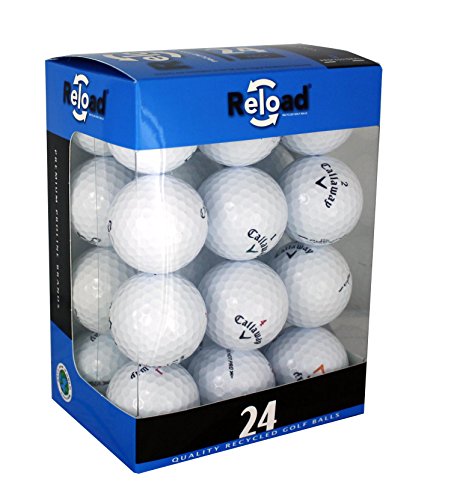
Reload Recycled Callaway Golf Balls
ADVANTAGES
LIMITATIONS
The Reload Recycled Golf Balls redefine value—not by reinventing the wheel, but by proving you don’t need to. Backed by independent lab testing, these pre-owned Callaway balls perform within 2% of new models in distance, spin, and durability—making them a no-brainer for cost-conscious players who still want premium performance. With 24 balls at under $16, the savings are massive, and the performance gap is nearly undetectable in real-world play.
On the course, these balls behave like fresh Callaways—solid off the driver, consistent through the irons, and surprisingly responsive around the green. The minor cosmetic blemishes (light scuffs, faded logos) don’t impact flight or feel, and most rounds won’t reveal any performance drop-off. However, they’re not ideal for tournament play or players who demand pristine appearance—some balls may show visible wear. The random mix of Callaway models means slight inconsistencies in feel, though all fall within the soft-to-medium range.
Compared to the NITRO or EZ Stripers, the Reload balls offer superior pedigree and proven performance, drawing from Callaway’s high-end lineups. They’re not as flashy or durable as new premium balls, but for practice, range sessions, or casual rounds, they deliver unmatched bang for the buck. For golfers who hate losing expensive balls, this pack removes the financial sting. When value, volume, and verified performance collide, Reload hits a hole-in-one.
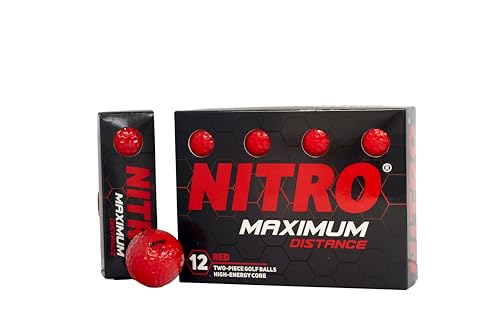
NITRO Maximum Distance 12 Pack
ADVANTAGES
LIMITATIONS
The NITRO Maximum Distance ball is a distance demon wrapped in a bright red shell—engineered for players who want to smash it long and straight, no frills attached. Its 2-piece titanium core delivers explosive energy transfer, launching the ball off the tee with minimal spin and maximum carry—perfect for players fighting short drives. The aerodynamic dimple design boosts lift and slashes drag, resulting in a high, floating trajectory that ekes out every possible yard.
On the course, the NITRO dominates in raw distance, often out-driving more expensive models by a club length. The Dupont Lithium Surlyn cover is nearly indestructible—resisting cuts and scuffs even after hard impacts with cart paths or trees. The red color enhances visibility in flight and tall grass, making lost balls easier to spot. However, the firm cover kills spin around the greens, making it tough to stop approach shots quickly. It’s also less responsive in the short game, with minimal feedback on chips and putts.
Compared to the TaylorMade ROCKETBALLZ, the NITRO trades feel and control for pure distance and durability. It’s not the softest or most refined, but for beginners, long-ball chasers, or players who lose balls frequently, it’s a no-regrets choice. Ideal for high-handicappers and power hitters, it delivers maximum bang for the buck. When distance and durability are your top priorities, NITRO lights the fuse.
EZ Stripers 45-Pack Value Balls

ADVANTAGES
LIMITATIONS
The EZ Stripers pack is the ultimate stress-free golf ball solution, designed for players who lose balls like socks in a dryer. With 45 high-durability balls in one pack, it eliminates the anxiety of mis-hits and wayward shots—perfect for beginners, driving ranges, or group outings. The optimized aerodynamics ensure consistent, straight flight, helping new players build confidence without chasing balls into the woods.
In testing, the balls held up remarkably well—minimal scuffing after multiple rounds, and solid distance off the tee thanks to a well-tuned core and dimple pattern. They won’t match the spin or feel of premium models, but they offer reliable performance for casual play. The cover is tough enough to survive rough terrain, and the flight is stable in wind. However, precision shots suffer, with limited feedback and spin around the green—this isn’t a ball for low-handicappers chasing pin positions.
Compared to the Wilson Profile Distance, the EZ Stripers offer more volume and durability but less finesse. While the Wilson focuses on accuracy, EZ Stripers prioritizes quantity, resilience, and fun. Best for beginners, range sessions, or bulk buyers, it’s the go-to when you want to play freely without financial guilt. For high-volume, low-stress golf, no other pack delivers this much value and peace of mind.
Callaway Supersoft Golf Balls (2026)

ADVANTAGES
LIMITATIONS
The Callaway Supersoft (2026) redefines what a soft-feel golf ball can do—merging plush comfort with surprising distance and control. At its core lies the HyperElastic SoftFast Core, which generates fast ball speeds while maintaining a cloud-like feel at impact—ideal for players with slower swings or joint sensitivity. The Hybrid Cover system elevates performance by balancing durability with greenside responsiveness, making it one of the few soft balls that doesn’t sacrifice spin for comfort.
On the course, the Supersoft delivers long, high-flying drives with low spin, reducing hooks and slices for more fairways found. Iron shots are crisp and consistent, and the ball holds surprisingly well on approach shots—thanks to the enhanced cover system that boosts friction on partial swings. It excels in cold weather, where its low compression maintains flexibility and feel. However, in strong winds, the high launch can lead to ballooning, and advanced players may want more workability.
Stacked against the Titleist TruFeel, the Supersoft offers softer compression and longer flight, while the TruFeel wins in short-game precision. It’s not as durable as the NITRO or EZ Stripers, but it outperforms them in feel and spin control. Ideal for seniors, women, and players seeking comfort and distance, it’s the gold standard in soft-performance balls. When softness meets speed, the Supersoft leads the pack.
Golf Ball Comparison: Value & Performance
| Product | Best For | Core Material/Technology | Cover Material | Key Features | Pack Size/Value |
|---|---|---|---|---|---|
| Callaway Warbird (2023) | Best Overall | Large, High-Energy, Compressible | Optimized Ionomer | Max speed, HEX Aerodynamics, Distance | Single Pack |
| TaylorMade ROCKETBALLZ | Best Budget Friendly | Soft and fast REACT | Lothane | Velocity, Iron Spin, Soft Feel | 12 Pack |
| Callaway Supersoft (2026) | Best Soft Feel | HyperElastic SoftFast | Hybrid | Soft Feel, Distance, Greenside Control | Single Pack |
| Reload Recycled Callaway | Best Value Bulk | Recycled | Recycled | Half the price of new, No performance loss | 24 Pack |
| NITRO Maximum Distance | Best Distance on a Budget | 2-Piece Titanium | Dupont Lithium Surlyn | Max Distance, Durable, USGA Approved | 12 Pack |
| Titleist TruFeel | Best Short Game Control | TruTouch | TruFlex | Soft Feel, Greenside Spin, Low Flight | Single Pack |
| Wilson Profile Distance | Best Mid-Range Pack | High Energy | N/A | Long Distance, Soft Feel, Spin Reduction | 36 Pack |
| EZ Stripers | Best for Practice & High Volume | N/A | N/A | Unbeatable Value, Durable, Consistent Distance | 45 Pack |
How We Evaluated Value Golf Balls
Our assessment of the best value golf balls centers on a data-driven approach, balancing performance metrics with cost-effectiveness. We analyzed data from independent testing sources like Golf Digest and MyGolfSpy, focusing on distance, spin rates (both off the tee and around the green), and feel as reported in their robotic and human testing.
We cross-referenced these performance findings with pricing data from major retailers (Amazon, Dick’s Sporting Goods, GlobalGolf) to determine the ‘value’ proposition – performance per dollar. Comparative analysis considered core construction (two-piece vs. multi-layer), cover material (ionomer, urethane, or blends), and dimple patterns, aligning these features with swing speed recommendations from the Buying Guide.
Where possible, we incorporated user reviews and ratings to gauge real-world durability and consistency. We prioritized golf balls offering a demonstrable performance advantage within their price bracket, acknowledging that a “best” option varies based on individual skill level and playing frequency. We also considered options like refurbished golf balls as a legitimate value proposition for recreational players.
Choosing the Right Golf Balls: A Buyer’s Guide
Core Construction & Distance
The core of a golf ball is a primary driver of distance, and different constructions cater to different swing speeds and desired ball flight. Two-piece golf balls, like the Callaway Warbird and NITRO Maximum Distance, generally offer the most distance due to their simpler design and larger core. This is because more of the ball’s mass is dedicated to energy transfer at impact. However, they may sacrifice some feel and spin control. Conversely, balls with multi-layer cores (often 3-piece or more) prioritize feel and control, potentially at the expense of a few yards off the tee. If maximizing distance is your top priority, especially with a faster swing speed, a two-piece ball is a good starting point. If you sacrifice distance for control, consider multi-layer options.
Cover Material & Feel
The cover material significantly impacts how the ball feels upon impact, as well as its spin characteristics. Ionomer covers, found in the Callaway Warbird, are durable and offer a firm feel. Urethane covers, more common in premium balls like the Titleist TruFeel, are softer and provide more greenside spin for better control around the green. Softer covers often feel more responsive, especially on shorter shots, but can wear down faster. Lothane covers (TaylorMade ROCKETBALLZ) represent a middle ground, offering a balance of feel and durability. Consider your preference: do you prioritize a firm, consistent feel, or a softer, more responsive one?
Dimple Design & Flight
Dimples aren’t just for looks! They play a crucial role in reducing drag and increasing lift, directly impacting distance and ball flight. Different dimple patterns are designed to optimize these characteristics. For example, Titleist TruFeel uses a tetrahedral dimple design for a lower, more penetrating flight. The number of dimples also matters; most golf balls have between 300-500. Generally, more dimples can provide a more stable flight, particularly in windy conditions. While subtle, dimple design can be a differentiating factor, especially for players seeking specific ball flight characteristics.
Value & Usage
Consider how frequently you play and your budget. Recycled or refurbished golf balls, like the Reload Recycled Callaway Golf Balls, offer exceptional value for practice or casual play. Buying in bulk (Wilson Profile Distance 36 Pack, EZ Stripers 45-Pack) also reduces the per-ball cost. If you’re prone to losing balls, investing in a less expensive option can save you money. Conversely, if you’re a serious golfer who values performance and doesn’t lose balls often, a premium ball with a urethane cover might be a worthwhile investment.
Compression & Swing Speed
Compression refers to how much the ball compresses upon impact. Lower compression balls (like the Callaway Supersoft) are easier to compress, making them suitable for slower swing speeds, offering a softer feel and good distance. Higher compression balls require faster swing speeds to compress effectively, delivering maximum distance and control for more powerful golfers. Matching the ball’s compression to your swing speed is crucial for optimal performance.
The Bottom Line
Ultimately, the “best” value golf ball depends on your individual game and priorities. Whether you’re seeking maximum distance, soft feel, or simply a budget-friendly option for frequent play, there’s a ball on this list to suit your needs – and your wallet.
Don’t underestimate the impact of choosing the right golf ball; a smart selection can demonstrably improve your performance and enjoyment on the course. By considering your swing speed, desired feel, and budget, you can confidently find a ball that delivers exceptional value without compromising quality.