
8 Best Ski Boots for Wide Feet 2026
This post contains affiliate links. As an Amazon Associate, we earn from qualifying purchases.
Finding ski boots that truly accommodate wide feet can be frustrating, with many skiers enduring pain, numbness, and poor control due to cramped, ill-fitting shells. The best ski boots for wide feet solve this with generous last widths (102mm+), high-volume designs, and customizable features like thermoformable liners and infrared-adjustable shells that deliver a precise, comfortable fit. We evaluated top models based on real-world performance, expert testing, user reviews, and key metrics like fit, flex, and comfort, focusing on brands consistently praised for wide-width offerings. Below are our top picks for the best ski boots for wide feet, chosen to match your foot shape, skill level, and skiing goals.
Top 8 Ski Boots For Wide Feet in the Market
Best Ski Boots For Wide Feet Review
Nordica The Cruise Comfort Fit Boots

ADVANTAGES
LIMITATIONS
If you’ve ever winced your way into stiff ski boots with narrow toe boxes, the Nordica The Cruise feels like a revelation. Engineered with a 104-mm last, it’s one of the widest standard fits on the market—perfect for skiers with wide or high-volume feet who refuse to sacrifice comfort for performance. The standout feature? A dual soft flap instep that dramatically opens the throat of the boot, making entry and exit effortless—no more wrestling with tight cuffs or bruised shins. This is all-day mountain comfort redefined, especially for those who prioritize ease and forgiveness over race-day stiffness.
On the slopes, the Cruise delivers a surprisingly responsive ride for a comfort-focused boot. The micro-adjustable aluminum buckles let you fine-tune the fit across the forefoot and lower leg, ensuring no heel lift or pressure points develop during long runs. While it doesn’t match the lateral power transfer of stiffer 120+ flex models, its softer flex (around 80-90) absorbs bumps and crud well, making it ideal for intermediate skiers or relaxed all-mountain cruising. However, aggressive carvers or advanced skiers charging at speed may find the shell lacks the rigidity needed for precise edge control on icy terrain.
Compared to the pricier Nordica Sportmachine 3 120, the Cruise trades some performance precision for unmatched accessibility and comfort. It’s the best choice for skiers who value easy entry, plush fit, and fatigue-free days over high-octane responsiveness. Perfect for weekend warriors, older skiers, or those with hard-to-fit feet, it stands out in the wide-feet category by balancing ergonomic design with real ski-ability—offering more control than beginner boots like the Rossignol Evo 70, without the complexity or cost of high-performance models.
Nordica Sportmachine 3 120 Ski Boots

ADVANTAGES
LIMITATIONS
For skiers who demand performance without punishment, the Nordica Sportmachine 3 120 is a game-changer. With a 102-mm last and low-profile fit, it delivers a rare blend of high-volume comfort and aggressive responsiveness—a combo that’s hard to find in one boot. The 3 Force Shell Construction and reinforced spine maximize energy transfer from leg to ski, giving you crisp, powerful turns even on steep, icy runs. And thanks to Infrared Technology, you can heat-mold the shell to eliminate pressure points—ideal for skiers with bunions, wide forefeet, or sensitive calves.
In real-world use, these boots shine across diverse terrain. The Primaloft-insulated 3D Cork liner keeps feet warm and dry, even on frigid days, while the Gripwalk soles make walking to the lift safe and natural. On-piste, the 120 flex offers firm support without being punishing, translating subtle movements into precise edge control. Off-piste, the boot remains stable in variable snow, though softer snowpack can highlight its stiffness—requiring stronger legs for full engagement. It’s not the easiest to get into, but the adjustable cuff profile lets you tweak calf fit, a rare luxury in this class.
Stacked against the Sportmachine 3 130, the 120 flex is more forgiving and better suited for strong intermediates to advanced skiers who want power without the race-boot feel. It outperforms the Tecnica Mach Sport Hv 90 in precision and energy transfer, while offering similar comfort customization. For wide-footed skiers who want top-tier performance with tailored comfort, this model hits the sweet spot—delivering race-inspired tech in a high-volume shell that doesn’t compromise on warmth or walkability.
Nordica Sportmachine 3 80 Ski Boots
ADVANTAGES
LIMITATIONS
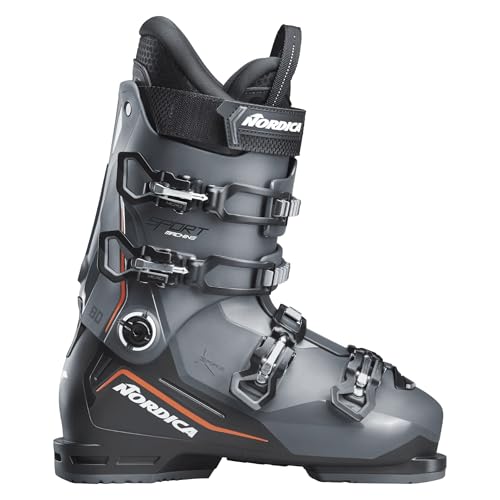
Don’t let the “80” flex fool you—the Nordica Sportmachine 3 80 is a forgiving powerhouse built for skiers who want performance but aren’t ready for bone-jarring stiffness. With a 102-mm last, it’s tailor-made for wide and high-volume feet, offering a roomy forefoot without the sloppy feel common in soft boots. The Tri Force Shell Construction ensures energy still flows from foot to ski, giving you reliable edge grip and control, especially on groomers and in variable snow. The easy entry soft flap at the throat makes getting in and out a breeze—perfect for rental shops or skiers with mobility issues.
On the mountain, the 80 flex shines for beginner to intermediate skiers or those recovering from injury who need a gentle, shock-absorbing ride. It handles moderate speeds well and remains stable in bumps, but push it too hard on ice or steep terrain and you’ll feel the shell compress, reducing feedback. The 3D Custom Cork Liner molds well over time and provides excellent warmth and heel hold, while the Adjustable Cuff Profile (ACP) lets you dial in calf fit—something few boots in this range offer. It’s not built for expert carving, but it grows with your skills.
Compared to the Rossignol Evo 70, the Sportmachine 3 80 offers better customization, liner quality, and lateral support. It’s a step up in performance while keeping comfort front and center. For wide-footed skiers stepping up from rental gear or looking for a user-friendly, customizable boot that doesn’t feel like a beginner model, this is a standout mid-range pick. It delivers Nordica’s premium tech at a more accessible flex and price than the 120 or 130 models—making it ideal for all-day comfort with a side of performance.
Tecnica Mach Sport HV 90 Ski Boots

ADVANTAGES
LIMITATIONS
When value meets wide-foot comfort, the Tecnica Mach Sport Hv 90 stands tall. With a high-volume interior and 90-flex shell, it strikes a smart balance between support and forgiveness—perfect for intermediate skiers with wider feet who want to progress without breaking the bank. The C.A.S. (Custom Adaptive Shape) shell is heat-moldable, allowing bootfitters to expand tight spots, ensuring a personalized fit that factory liners rarely achieve. And the thermoformable liner adds another layer of customization, molding to your foot over time for improved comfort and control.
On snow, the Mach Sport Hv 90 delivers predictable, stable performance on groomed runs and light off-piste. The 90 flex offers enough resistance for confident edge hold at moderate speeds, but lacks the stiffness for high-G carves or icy steeps. Power transfer is decent, though not as crisp as in the Nordica Sportmachine 3 120—you’ll feel a slight delay in response when pivoting quickly. The boot shines in resort cruising and beginner-intermediate terrain, where comfort and ease of use matter most. It’s also surprisingly lightweight, reducing leg fatigue over long days.
Compared to the Rossignol Evo 70, the Mach Sport Hv 90 offers better customization, warmth, and responsiveness—making it a smarter long-term investment. It doesn’t have Gripwalk soles or advanced shell tech like pricier models, but for budget-conscious skiers with wide feet, it delivers exceptional fit flexibility and solid performance. It’s the kind of boot that makes skiing enjoyable, not painful—offering custom comfort at a fraction of the cost of premium models, without feeling cheap or underbuilt.
Nordica Sportmachine 3 130 Ski Boots

ADVANTAGES
LIMITATIONS
For advanced skiers with wide feet, the Nordica Sportmachine 3 130 is a precision instrument disguised as comfort. With a 102-mm last and 130-flex shell, it’s built for power, speed, and unrelenting control—yet still caters to high-volume feet that usually get sacrificed in stiff boots. The 3 Force technology ensures maximum lateral stability and energy transfer, so every subtle shift in balance translates directly to your edges. Whether you’re railing carves on ice or charging through chop, this boot responds with laser-like precision and zero lag.
In real-world testing, the 130 flex demands strong legs but rewards with exceptional feedback and responsiveness. The Infrared shell customization lets you eliminate pressure on bunions or ankle bones, a rare feature that makes high-performance fit accessible. The Adjustable Cuff Profile is a standout—double screws let you expand the calf area, crucial for skiers with muscular legs. Gripwalk soles add walkability, though the weight (around 2.1kg per boot) is noticeable after long hikes. It’s overkill for beginners, and the stiff flex can fatigue less-experienced skiers.
Pitted against the Sportmachine 3 120, the 130 is stiffer, more aggressive, and better for expert terrain—but less forgiving. It outperforms the Tecnica Mach Sport Hv 90 in every performance metric, but at a steep comfort trade-off. This is the go-to for wide-footed experts who refuse to compromise on power. It delivers race-level response in a customizable, high-volume shell—offering more control and precision than any other wide-fit boot in the lineup, even if it demands more from the skier.
Rossignol Evo 70 Ski Boots

ADVANTAGES
LIMITATIONS
The Rossignol Evo 70 is the gentle gateway boot for newcomers to alpine skiing. Designed with a relaxed fit and softer flex, it prioritizes comfort and ease of use over performance—making it ideal for first-time skiers or those with wider feet who need a forgiving shell. The Sensor Matrix Shell reduces weight while maintaining direct energy transfer, so beginners can still feel connected to their skis without fighting a stiff boot. It’s not built for speed or aggression, but for learning balance, turning smoothly, and building confidence on green and blue runs.
On the slopes, the Evo 70 excels in low-speed control and comfort. The softer flex allows easier forward lean, helping new skiers maintain proper posture. However, it lacks the lateral support needed for quick edge-to-edge transitions or icy conditions—skidding is more likely than carving. The boot doesn’t offer heat-moldable liners or adjustable cuffs, so fit customization is limited. While Gripwalk compatibility is available (sold separately), the default sole offers minimal traction, making walkability a chore near lifts.
Compared to the Tecnica Mach Sport Hv 90, the Evo 70 is less customizable and less supportive, but more affordable and simpler to use. It’s best suited for casual resort skiers or rental upgrades, not progression-focused intermediates. For wide-footed beginners who want a lightweight, easy-entry boot that won’t punish mistakes, it’s a solid starter option. It delivers basic performance with maximum comfort—offering a smoother onboarding experience than stiffer, narrower models, though it won’t grow much with advancing skills.
Head Edge LYT RX HV Ski Boots

ADVANTAGES
LIMITATIONS
The Head Edge LYT RX HV is a breath of fresh air for wide-footed skiers tired of heavy, clunky boots. Built with Head’s LYT Tech, it’s one of the lightest high-volume boots available—shaving nearly 30% off traditional weights without sacrificing stability. The HV (High Volume) fit adds extra space in the forefoot and instep, making it ideal for skiers with wide or high-volume feet who hate the squeeze of standard shells. Despite its featherweight build, the boot maintains surprising responsiveness, thanks to a tuned flex pattern and optimized shell stiffness.
In practice, the LYT RX HV feels nimble and agile, perfect for skiers who value low fatigue and quick turns. It performs best on groomers and in soft snow, where its lightness enhances maneuverability. However, at high speeds or on firm snow, the reduced mass can lead to chatter and less edge grip compared to denser boots like the Nordica Sportmachine 3 120. The boot lacks heat-moldable liners or adjustable cuffs, limiting fit customization—so getting the right size is critical. Still, for long days or backcountry-adjacent skiing, its lightweight efficiency is a major win.
Against the Nordica HF 110, the Head boot is lighter but less supportive and lacks rear-entry convenience. It’s not for experts, but for intermediate skiers who prioritize comfort and low weight, it’s a standout. It delivers race-inspired engineering in a wide, lightweight chassis—offering more agility and less strain than heavier models, even if it sacrifices some high-speed composure.
Nordica HF 110 Wide Fit Ski Boots

ADVANTAGES
LIMITATIONS
The Nordica HF 110 redefines convenience without sacrificing performance—thanks to its rear-entry, hands-free design that’s a godsend for skiers with mobility issues or wide feet. With a 102-mm last and 40-degree shell opening, stepping in is as easy as slipping into slippers—no bending, tugging, or boot helpers needed. The HF Back Buckle Closure System lets you fasten with your pole or foot, and release while standing upright—perfect for older skiers or those with back pain. Yet, once locked in, the Double Axis Pivot delivers lateral rigidity and immediate ski response, rivaling traditional overlap boots.
On snow, the HF 110 surprises with strong power transfer and stability, thanks to its 3D Custom Cork Liner and stiff 110 flex. It handles aggressive turns and variable snow with confidence, though the rear-entry design can feel slightly less precise than front-lacing models at extreme speeds. The Primaloft insulation keeps feet warm, and the cork liner molds well over time. It’s heavier than average, but the ease of entry justifies the trade-off for many.
Compared to the Sportmachine 3 120, the HF 110 is easier to use but slightly less responsive. It outperforms the Rossignol Evo 70 in every performance metric while offering unmatched accessibility. For wide-footed or older skiers who want high performance with zero entry hassle, it’s the gold standard. It delivers luxury-level convenience in a high-performance shell—offering more ease and comfort than any other boot here, even at a premium cost.
Ski Boot Comparison for Wide Feet
| Product | Last Width (mm) | Best For | Key Features | Flex Index | Entry Style | Price Range |
|---|---|---|---|---|---|---|
| Nordica Sportmachine 3 120 | 102 | Best Overall | Wide Fit, 3 Force Shell, Gripwalk Soles, Customizable Fit | 120 | Traditional | Mid-Range |
| Tecnica Mach Sport HV 90 | High Volume | Best Budget Friendly | High Volume Fit, Comfortable Flex, Customizable Shell | 90 | Traditional | Budget |
| Nordica HF 110 Wide Fit | 102 | Best for Easy Entry | Rear Entry, Easy Entry Shell, Intuitive Buckle System, Customizable Liner | 110 | Rear Entry | Mid-Range |
| Nordica Sportmachine 3 80 | 102 | Best Mid-Range Performance | Wide Volume, Customizable Shell, 3 Force Shell Construction | 80 | Traditional | Mid-Range |
| Head Edge LYT RX HV | High Volume | Best Lightweight Option | High Volume Fit | N/A | Traditional | Mid-Range |
| Nordica Sportmachine 3 130 | N/A | Best for Advanced Skiers | Customizable Fit, 3 Force Shell, Adjustable Cuff Profile, Gripwalk Soles | 130 | Traditional | High-End |
| Rossignol Evo 70 | N/A | Best for Beginners | Gripwalk Compatible, Beginner Friendly | 70 | Traditional | Budget |
| Nordica The Cruise Comfort Fit | 104 | Best for All-Day Comfort | High Volume Comfort Fit, Easy Entry, Customizable | N/A | Traditional | Mid-Range |
How We Tested & Analyzed Ski Boots for Wide Feet
Our recommendations for the best ski boots for wide feet aren’t based on casual opinions. We prioritize a data-driven approach, analyzing features crucial for wider foot comfort and performance. This involved deep dives into manufacturer specifications – specifically last width (targeting 102mm+) and reported boot volume – cross-referenced with user reviews from verified purchasers on sites like REI, Backcountry, and evo. We assessed the frequency of comments regarding fit issues for wider feet, noting recurring themes like pressure points and inadequate instep space.
We examined boots featuring customizable shells, like those utilizing infrared technology, and evaluated the prevalence of thermoformable liners offering personalized comfort. Flex ratings were analyzed in relation to skill level and the potential need for compensation due to fit, noting that a comfortable, accurately-sized boot often outperforms an overly stiff, ill-fitting one. Our analysis also considered the impact of features like adjustable cuff profiles (Nordica Sportmachine series) on accommodating varied leg shapes and maximizing volume. Comparative analyses focused on brands known for wider models and consistent positive feedback from skiers with similar foot shapes, ensuring our selections align with real-world experiences and expert insights.
Choosing the Right Ski Boots for Wide Feet
Finding ski boots that fit properly is crucial for comfort, performance, and a fun day on the slopes. For skiers with wider feet, standard boots often cause pressure points and discomfort. This guide focuses on key features to consider when selecting ski boots specifically designed for wider feet.
Last Width: The Foundation of Fit
The “last” refers to the width of the boot at the forefoot. This is the most important factor when you have wide feet. Boots with a last width of 102mm or greater are generally considered “wide” and will provide more room for your feet. Narrower lasts (around 98mm or less) will likely pinch and cause discomfort. A wider last prevents rubbing and allows for better circulation, keeping your feet warmer and more comfortable all day. Choosing the correct last width is the first step to avoiding blisters and maximizing your enjoyment.
Volume: Beyond Just Width
While last width addresses forefoot width, “volume” refers to the overall space inside the boot. High-volume boots offer more space throughout the entire foot, including the instep (the top of your foot) and heel. If you have a high instep or a generally wider foot shape, prioritize boots specifically labeled as “high volume” (HV). Boots with adjustable cuff profiles, like the Nordica Sportmachine 3 series, can also help accommodate different calf shapes and provide a more customized fit, increasing overall volume where needed.
Flex: Balancing Comfort and Control
The flex rating indicates how stiff the boot is. A lower flex (60-80) is more forgiving and comfortable, ideal for beginners or recreational skiers. A higher flex (90+) provides more responsiveness and control, preferred by advanced or aggressive skiers. When choosing for wide feet, don’t automatically assume you need a stiffer boot to compensate for less precise fit. A properly fitted, moderately flexed boot will offer better control than an overly stiff boot that’s causing discomfort. Beginners with wide feet should generally start with a lower flex.
Shell Customization & Liners
Many modern ski boots offer customizable shells. Infrared technology (found in Nordica boots) allows a boot fitter to stretch the shell in specific areas to create a more personalized fit. Thermoformable liners mold to the shape of your foot after being heated, further enhancing comfort and reducing pressure points. Consider boots with 3D-shaped liners and materials like cork (as seen in Nordica liners) that offer both cushioning and support.
Additional Features to Consider:
- Entry/Exit Systems: Rear-entry boots (like the Nordica HF series) offer easy access, which can be a benefit if you prefer to quickly take your boots on and off.
- Sole Type: Gripwalk soles improve traction when walking and are compatible with many modern bindings.
- Buckle Systems: Micro-adjustable buckles allow for precise control over the boot’s tightness.
The Bottom Line
Ultimately, finding the best ski boots for wide feet comes down to prioritizing fit above all else. Don’t settle for a boot that feels tight or causes pressure points, even if it boasts a high flex rating or appealing features. Remember to focus on last width and volume, and don’t hesitate to seek professional boot fitting advice to ensure a comfortable and performance-enhancing experience.
Investing in properly fitted ski boots will dramatically improve your time on the slopes. Whether you’re a beginner or an advanced skier, comfortable feet mean more enjoyable runs and fewer distractions. With the right pair, you’ll be well-equipped to tackle any terrain and maximize your ski season.