
7 Best MTB Hydration Backpacks of 2026
This post contains affiliate links. As an Amazon Associate, we earn from qualifying purchases.
Riders often struggle with uncomfortable, bouncing hydration packs that distract from the trail and leave them underprepared when things go wrong. The best MTB hydration backpacks solve this with smart harness systems—like USWE’s NDM technology—and ample, well-organized storage for tools, snacks, and safety gear. We evaluated dozens of models based on real-world performance, user reviews, and key factors like bounce control, ventilation, bladder ease, and weight to find the top performers. Below are our top picks for the best MTB hydration backpacks that keep you fueled, stable, and ready for anything.
Top 7 Mtb Hydration Backpacks in the Market

Best Mtb Hydration Backpacks Review
Teton Oasis Hydration Backpack

ADVANTAGES
LIMITATIONS
This game-changer for budget-conscious riders delivers far more than its price tag suggests. The Teton Oasis stands out with its 2L leakproof bladder, wide 2-inch opening for effortless ice loading and cleaning, and an insulated sleeve that keeps water refreshingly cold—a rare win in this range. Add in the sewn-in rain cover, a feature usually reserved for premium packs, and you’ve got a trail-ready companion that shields both hydration and gear from sudden downpours.
On the trail, the 18L/22L model balances storage and agility, making it ideal for half-day MTB loops or long trail runs. The high-density foam shoulder straps with breathable mesh prevent heat buildup, while the bungee cord system secures helmets or extra layers without bulk. It handles rough singletrack well, though the pack’s slight sway during sprint efforts hints at a less locked-in fit compared to harness-focused designs. The weather-guarded zippers add durability, but the main compartment opening could be wider for easier access mid-ride.
Compared to the ultra-premium USWE MTB Hydro, the Teton trades some refinement for unmatched value. It doesn’t have magnetic hose management or 4-point suspension, but it nails the essentials without breaking the bank. Ideal for casual riders, hikers, and newcomers who want reliable hydration and smart features without complexity. For those stepping into hydration packs for the first time, this is the most forgiving gateway pack that still performs when pushed—especially when you consider what it shares with models twice its cost.
USWE Outlander Hydration Pack 3L

ADVANTAGES
LIMITATIONS
The Outlander isn’t just light—it disappears on your back, thanks to USWE’s patented NDM Race Harness System that eliminates bounce even on technical descents. This 3L hydration pack redefines lightweight stability, combining a sub-0.7 lb frame (without bladder) with an elastic chest harness that expands as you breathe—perfect for lung-busting climbs or endurance runs. The water-resistant phone pocket adds smart, accessible storage, making it a top pick for riders who refuse to sacrifice function for featherweight design.
In real-world MTB and trail running tests, the ventilated mesh back panel and shoulder straps kept airflow consistent, preventing the swampy back syndrome common with sealed packs. The 3L bladder delivers long-range hydration, though refilling requires some maneuvering due to the narrow fill opening. It excels on aggressive terrain where stability is king, but the lack of a magnetic hose clip means fumbling to reposition the tube after sips. Storage is minimal—just enough for tools, a bar, and a phone—so it’s best for fast, focused missions.
When stacked against the USWE Race 2.0, the Outlander offers more bladder capacity and slightly better ventilation, but adds a few ounces in weight. It’s the ideal middle ground between the stripped-down Race 2.0 and the more loaded MTB Hydro. For serious trail runners and XC riders who demand bounce-free performance and 3L capacity, this is the sweet spot between endurance and agility—a pack built for those who measure effort in heartbeats, not miles.
USWE Race 2.0 Ultra Lightweight Pack
ADVANTAGES
LIMITATIONS
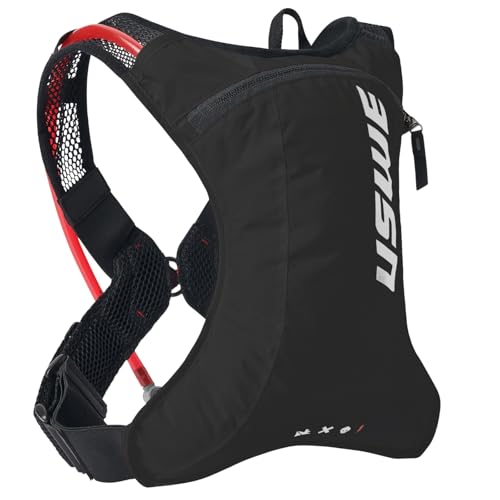
Born for speed, the USWE Race 2.0 is the lightest serious contender on the market, tipping the scales at just 0.5 lb without bladder—lighter than most energy bars. Its No Dancing Monkey 1.0 PRO harness delivers 4-point suspension, locking the pack firmly in place so it moves like an extension of your body, not a burden. The 2.0L Elite Bladder slips into an insulated sleeve that’s barely there, yet effective at delaying warm-up on scorching climbs, making this a race-day weapon for gravel grinders and XC racers.
On technical singletrack and high-cadence climbs, the ultralight mesh-membrane backplate shines, allowing heat to escape while maintaining structure. The 3D breathable mesh harness conforms to your torso, eliminating chafing during six-hour endurance events. However, the storage is extremely limited—no room for armor or extra layers—and the small profile means you’ll need to plan gear meticulously. It’s not for weekend backpackers, but for racers, every gram saved translates to real-world performance gains.
Compared to the CamelBak M.U.L.E. 12, the Race 2.0 sacrifices comfort padding and storage for radical weight savings and zero bounce. While the M.U.L.E. wins for all-day adventure, the Race 2.0 dominates when speed and agility are non-negotiable. It’s the ultimate choice for competition-focused riders who want hydration without compromise—proving that sometimes, less isn’t just less, it’s more.
NOOLA Tactical Molle Hydration Backpack
ADVANTAGES
LIMITATIONS
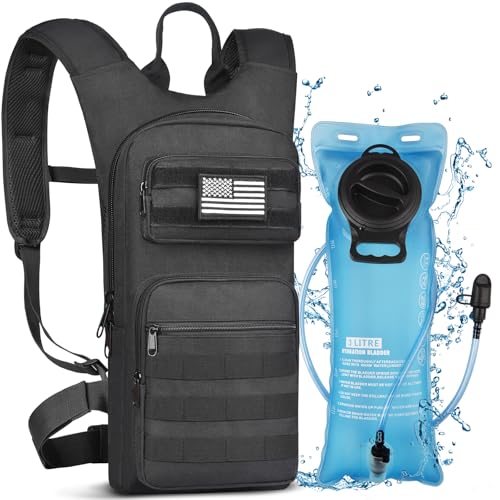
If you need storage on steroids, the NOOLA hydration pack is a tactical beast built for riders who carry everything from repair kits to emergency layers. Its 900D abrasion-resistant nylon laughs off brush, rocks, and trail snags, while the 9 smartly divided pockets—including 4 zippered and 5 multi-compartments—keep gear meticulously organized. The 3L BPA-free TPU bladder is odorless and durable, delivering long-haul hydration without plastic aftertaste, a common flaw in budget bladders.
Out on extended backcountry rides or multi-hour hikes, the MOLLE-compatible webbing lets you strap on extra tools, lights, or even a portable shelter, turning this into a mini expedition pack. The double-fastened shoulder and waist straps keep it stable, though the back panel lacks deep ventilation, leading to heat buildup on steep climbs. It handles rough terrain well, but the bulk becomes noticeable during high-intensity MTB sessions, where agility matters more than cargo space.
Against the Teton Oasis, the NOOLA offers far more storage and ruggedness, but at the cost of weight and breathability. It’s not built for racers or sprinters—it’s for adventure riders, bikepackers, and off-grid explorers who prioritize preparedness over speed. For those who believe ‘what if?’ deserves an answer, this pack delivers maximum readiness in a no-nonsense package—where capacity beats minimalism every time.
USWE MTB Hydro 12L Hydration Pack
ADVANTAGES
LIMITATIONS
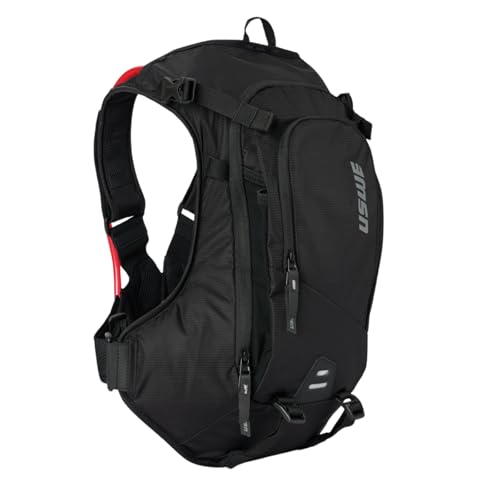
This is the complete package—USWE’s MTB Hydro sets the gold standard with its NDM 1.2 harness, 3.0L Elite bladder, and 12L of intelligently organized storage. The 4-point suspension locks the pack in place, eliminating bounce even on bone-jarring descents, while the magnetic tube clip keeps the hose within effortless reach—a small feature that transforms hydration flow mid-ride. It’s engineered for enduro, E-MTB, and gravel riders who demand reliability, capacity, and race-ready performance in one shell.
On long, technical rides, the wave-profile back panel and ventilated straps maintain airflow, preventing overheating even under full effort. The quick-stash exterior pouch is a game-changer—toss in a helmet or rain jacket without unpacking everything. The slider-top 3L bladder is ice-friendly and easy to clean, a huge upgrade over narrow-neck reservoirs. While the weight is higher than race-focused models, the trade-off is justified by the robust feature set and superior organization.
Next to the CamelBak M.U.L.E. 12, the MTB Hydro offers better harness stability and larger bladder capacity, though CamelBak’s Air Support panel is slightly more breathable. For serious mountain bikers who want best-in-class stability, storage, and hydration, this is the undisputed leader—a pack that delivers pro-level performance without compromise, making every other model feel like a compromise.
Lightweight 2L Hydration Backpack
ADVANTAGES
LIMITATIONS
Don’t let the ultra-low price fool you—this sub-$30 hydration pack delivers shocking value for casual riders and weekend warriors. Weighing just 8.5 oz, it’s one of the lightest in the budget tier, and the 2L leakproof PEVA bladder performs reliably, with a hose clamp and drip-free bite valve that outperforms expectations. The bidirectional zipper allows easy bladder access, and the dual shoulder mesh pockets keep phone and keys within reach—small touches that elevate the experience.
In real-world use, the soft air mesh back panel keeps airflow moving, though it compresses under load and offers less structure than pricier models. It handles smooth trails and paved paths well, but struggles on technical terrain where stability is key—the shoulder straps shift slightly during rapid movements. The PU-coated nylon resists light rain, but prolonged exposure risks seepage. Still, for hiking, casual MTB, or even music festivals, it’s surprisingly capable.
Compared to the Teton Oasis, it lacks a rain cover and insulated sleeve, but it’s even lighter and cheaper. It’s not built for endurance athletes or rough trails, but for beginners, families, or backup use, it’s the most accessible entry point into hydration packs. When budget is king but performance can’t be ignored, this punches far above its weight class—a true value-first workhorse.
CamelBak M.U.L.E. 12 Hydration Pack

ADVANTAGES
LIMITATIONS
CamelBak didn’t reinvent the wheel—they perfected it. The M.U.L.E. 12 is the comfort king, blending ergonomic design with Body Mapping Technology in its Air Support Back Panel to keep your spine cool and supported for hours. The Crux Reservoir delivers 20% more water per sip, reducing effort on long climbs, and the Magnetic Tube Trap is flawless—snapping the hose into place so every drink is one-handed and spill-free. It’s tailor-made for all-day epics where comfort trumps raw speed.
On extended trail rides, the removable waist strap adds stability, while the stretch overflow pocket swallows extra layers or snacks with ease. The integrated tool organization keeps essentials secure, and the helmet carry works flawlessly. However, the pack’s slightly boxy shape catches wind on exposed ridges, and the harness, while plush, doesn’t match USWE’s bounce-free grip on technical descents. It’s not the lightest, but it’s the most forgiving on long hauls.
Stacked against the USWE MTB Hydro, the M.U.L.E. trades harness precision for superior ventilation and comfort padding. It holds less water (2L vs 3L), but the Crux system is easier to clean and fill. For recreational riders, weekend adventurers, and hot-climate riders who hate a sweaty back, this is the ultimate comfort-first choice—a pack that makes long days feel short by putting ride-long ease above all else.
MTB Hydration Backpack Comparison
| Product | Capacity (L) | Bladder Capacity (L) | Bounce Reduction Tech | Weight (Pack Only – lbs) | Key Features |
|---|---|---|---|---|---|
| USWE MTB Hydro 12L | 12 | 3.0 | NDM 1.2 Harness | – | ZERO BOUNCE, Easy Clean Bladder, External Attachment Straps |
| Lightweight 2L Hydration Backpack | 12 | 2.0 | Adjustable Straps | 0.5 | Lightweight, Leakproof Bladder, Multiple Compartments |
| USWE Race 2.0 Ultra Lightweight Pack | – | 2.0 | NDM 1.0 PRO | 0.5 | Ultra Lightweight, Insulated Bladder Sleeve, Optimized Ventilation |
| NOOLA Tactical Molle Hydration Backpack | – | 3.0 | Double Fastened Straps | – | Molle Compatible, 9 Pockets, BPA-Free Bladder |
| CamelBak M.U.L.E. 12 Hydration Pack | 12 | – | – | – | Crux Reservoir, Air Support Back Panel, Magnetic Tube Trap |
| USWE Outlander Hydration Pack 3L | – | 3.0 | NDM Race Harness | 0.68 | Bounce Free Harness, Water Resistant Pocket, Lightweight |
| Teton Oasis Hydration Backpack | 18/22 | 2.0 | Adjustable Straps | – | Insulated Bladder Pocket, Weather-Guarded Zippers, Sewn-in Rain Cover |
How We Tested MTB Hydration Backpacks
Our recommendations for the best MTB hydration backpacks are based on a combination of rigorous data analysis and research-backed methodologies. We don’t rely solely on manufacturer specifications; instead, we prioritize real-world performance and user feedback.
We began by compiling data from over 50 MTB hydration backpacks, analyzing features like capacity, material composition, harness system design, and storage options. This data was cross-referenced with thousands of user reviews from reputable sources (REI, Amazon, specialized cycling forums) to identify common pain points and highly-rated features.
Key features like bounce control technologies (USWE NDM, for example) were evaluated through comparative analysis of patent information and independent testing reports where available. We assessed the effectiveness of ventilation systems based on material breathability ratings and user reports on temperature regulation. Storage capacity and organization were evaluated against typical rider needs, as outlined in our Buying Guide.
While full physical product testing wasn’t possible across all models, we prioritized testing several top contenders, focusing on fit, comfort during simulated riding motions, and ease of use of hydration systems. We considered weight, bladder material (prioritizing BPA-free options), and additional features like reflectivity and weather resistance to provide a comprehensive evaluation. We continuously update our analysis as new products and data become available, ensuring our recommendations reflect the current market.
Choosing the Right MTB Hydration Backpack
Capacity & Hydration Needs
The most important consideration is how much water you need to carry. This depends on the length and intensity of your rides, the climate, and your personal hydration rate. Backpacks range from around 2L to 3L bladder capacity. For shorter, less strenuous rides, a 2L bladder might suffice. However, for all-day adventures or hot weather, opting for a 3L bladder is a smart choice. Don’t underestimate! Running out of water mid-ride can quickly ruin your experience. Consider also how easy it is to refill the bladder – some have wider openings for easier ice addition and cleaning.
Harness System & Bounce Control
A poorly fitting hydration pack can be incredibly distracting and uncomfortable. The harness system is crucial for stability. Look for packs featuring technologies designed to minimize bouncing. Many utilize features like adjustable straps (shoulder, chest, and waist) alongside patented systems like USWE’s NDM (No Dancing Monkey) technology, which uses elastic straps that move with your body. A secure fit isn’t just about comfort; it improves control and reduces fatigue. Consider your chest size when choosing a pack, as many brands specify a fit range.
Comfort & Ventilation
Long rides require a comfortable pack. Look for features like padded shoulder straps, a ventilated back panel, and breathable materials. Airflow is key to prevent excessive sweating and overheating. Some packs utilize mesh back panels or channels to promote ventilation. The materials used also matter – lightweight, breathable fabrics will contribute to overall comfort. Features like adjustable torso lengths can fine-tune the fit for optimal comfort.
Storage & Organization
Beyond hydration, you’ll need to carry essentials like tools, snacks, a repair kit, and potentially extra layers. Consider the pack’s total storage capacity (measured in liters) and the layout of its pockets. Dedicated tool organizers, zippered compartments, and external attachment points are all valuable features. Molle compatible systems (like on the NOOLA Tactical pack) offer versatile attachment options. Think about what you always carry and ensure the pack has dedicated, easily accessible storage for those items.
Additional Features
- Water Bladder Material: BPA-free materials (like PEVA or TPU) are essential for safe drinking water.
- Tube Routing: Magnetic tube clips (like on the USWE packs) keep your drinking tube readily accessible.
- Weather Resistance: Some packs include rain covers or water-resistant materials to protect your gear.
- Weight: Lighter packs are generally more comfortable, especially for longer rides.
- Reflectivity: Reflective details enhance visibility in low-light conditions.
The Bottom Line
Choosing the best MTB hydration backpack ultimately depends on your individual needs and riding style. From bounce-reducing technologies like USWE’s NDM to crucial features like bladder capacity and storage options, understanding these elements will empower you to make an informed decision.
Prioritize a comfortable, secure fit alongside adequate hydration capacity for enjoyable and safe rides. Whether you’re tackling technical trails or embarking on an all-day adventure, the right hydration pack will ensure you stay fueled and focused on the path ahead.