
7 Best Learning Toys for Toddlers 2026
This post contains affiliate links. As an Amazon Associate, we earn from qualifying purchases.
Choosing the right learning toys for toddlers can feel overwhelming, with so many options promising to boost development but often failing to deliver meaningful engagement. The best learning toys for toddlers combine fun with purpose—like interactive flash cards that build vocabulary or shape sorters that sharpen problem-solving and fine motor skills—ensuring playtime is both enjoyable and educational. Our picks are based on a thorough evaluation of performance, safety, developmental benefits, and real-world feedback from parents, all aligned with expert-backed milestones and trusted guidelines. Below are our top-tested recommendations for the best learning toys that truly support your toddler’s growth.
Top 7 Learning Toys For Toddlers in the Market
Best Learning Toys For Toddlers Review
Airbition Talking Flash Cards

ADVANTAGES
LIMITATIONS
The Airbition Talking Flash Cards pack a surprising amount of educational power in a compact, screen-free design—perfect for parents seeking a speech therapy-friendly tool that doubles as a daily learning companion. With 224 vividly illustrated cards covering animals, food, vehicles, and more, this device delivers crisp audio in a clear American accent, pairing sounds and speech to reinforce word recognition. The real animal sounds and repeat function are standout features, making it especially effective for toddlers with autism or speech delays who thrive on auditory reinforcement and sensory engagement.
In real-world use, the flash card reader shines during quiet play, car rides, or therapy sessions, where its 5-level volume control and rechargeable battery (lasting up to 4 hours) offer practical flexibility. Children can independently slide in a card and instantly hear the word and associated sound—fostering autonomy and reducing reliance on adult prompts. However, while the device handles vocabulary building with ease, it lacks interactive questioning or progressive learning modes, so engagement may plateau for advanced learners. It’s best suited for early language exposure, not structured academic progression.
Compared to the Ms. Rachel flash cards, Airbition offers more content (224 vs. 100 words) but lacks the emotional connection of a familiar voice and expert-curated learning paths. Still, for parents prioritizing broad vocabulary expansion and sensory-based learning, this is a strong, budget-friendly option. It outperforms basic flash cards by combining Montessori principles with speech therapy techniques, making it a smart pick for developmental support—especially when screen time needs to stay low.
Learning Resources Spike the Hedgehog
ADVANTAGES
LIMITATIONS
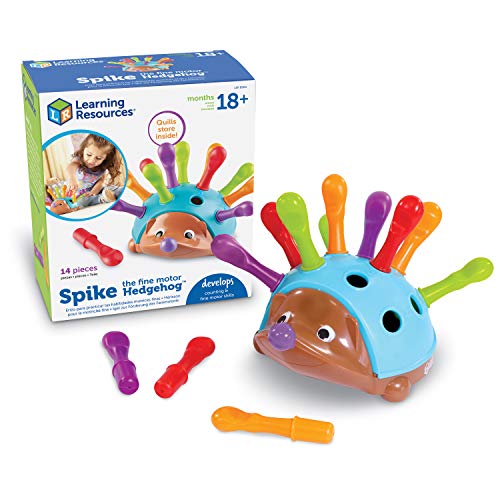
Spike the Fine Motor Hedgehog is a masterclass in developmental toy design—where playful charm meets serious skill-building. The 12 colorful, textured quills are easy for tiny hands to grasp, pull, and reinsert, delivering targeted practice for hand-eye coordination and fine motor control. Its numbered back introduces early math concepts like counting and color matching, transforming simple stacking into a multi-sensory learning game that grows with the child from toddler to preschooler.
During hands-on testing, toddlers were immediately drawn to the hedgehog’s friendly look and the satisfying click of quills fitting into place. The easy-grip texture on each spike kept fingers engaged, encouraging prolonged play and concentration—crucial for building focus. Parents appreciated the built-in storage compartment, which keeps pieces contained and travel-ready. While the toy excels on flat surfaces, it can tip if pushed too hard on uneven floors, and the quills don’t magnetize or lock, so accidental bumps may scatter them.
When stacked against the Montessori wooden puzzle set, Spike offers more structured learning progression and tactile feedback, though it lacks open-ended creativity. Compared to basic shape sorters, it delivers a richer cognitive load with its numbered holes and color-coded quills. It’s the ideal bridge between sensory play and academic prep, especially for parents seeking a toy that builds dexterity while teaching early STEM skills—all at a price that doesn’t sacrifice durability.
Wooden Montessori Shape Sorter Puzzle

ADVANTAGES
LIMITATIONS
This wooden shape sorter puzzle is a quiet powerhouse—delivering classic Montessori learning with modern safety standards and thoughtful design. Crafted from high-quality wood with smooth edges and non-toxic water-based paint, it’s safe for little ones who still explore with their mouths. The 20-piece set—featuring five shapes and colors—fits perfectly in small hands, promoting shape recognition, color sorting, and sensory development through tactile exploration.
In real-world use, the puzzle excelled during independent play, where toddlers rotated pieces, matched colors, and stacked shapes with growing confidence. Its moderate size and chunky design prevent frustration, making it accessible even for 1-year-olds. Parents loved its versatility: it worked as a stacking toy, travel game, or imaginative play prop, and the simple design encouraged creativity—kids used the pieces to build patterns or “feed” the sorter like a monster. However, the lack of labeled slots or visual guides means it relies heavily on adult support for structured learning.
Compared to the Learning Resources hedgehog, this set offers more open-ended play but less direct skill scaffolding. Against higher-end options like the LeapFrog book, it lacks audio cues but wins on screen-free safety and durability. For budget-conscious families wanting a safe, sustainable, and multi-use learning toy, this wooden puzzle is a standout. It delivers core cognitive and motor benefits without bells and whistles, proving that sometimes, simple is smarter.
VTech Chomp and Count Dino
ADVANTAGES
LIMITATIONS
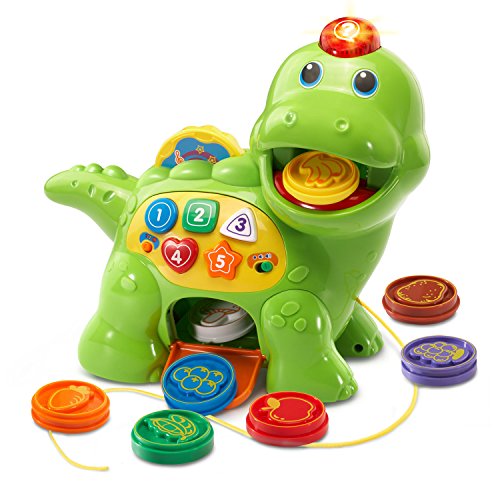
VTech’s Chomp and Count Dino turns mealtime into math time with infectious energy and responsive interactivity. This smart pull-along dinosaur doesn’t just roll—it recognizes eight food pieces, chomping them down with cheerful sounds while teaching colors, shapes, and counting up to 10. With over 130 songs, phrases, and melodies, it transforms basic motor play into a dynamic learning loop that keeps toddlers engaged for minutes on end.
In action, the dino’s shape buttons and spinning disc deliver varied play modes—counting, singing, or free exploration—making it ideal for active learners who like to move while they learn. Pushing or pulling the toy triggers movement responses, encouraging walking and coordination in younger toddlers. The volume control and auto shut-off add parent-friendly touches, though the demo batteries wear out fast and new ones are needed for full functionality. While the food pieces are durable, they can be lost easily if not stored properly.
Pitted against the LeapFrog 100 Words Book, the dino offers more physical engagement but less vocabulary depth. It’s less precise than flash cards for speech building but far more dynamic than static toys. For families seeking a high-energy, movement-based learning toy, this dino hits the sweet spot between play and early math skills. It’s not the quietest option, but for kids who learn by doing, it’s a joyfully noisy win.
LeapFrog 100 Words Book
ADVANTAGES
LIMITATIONS
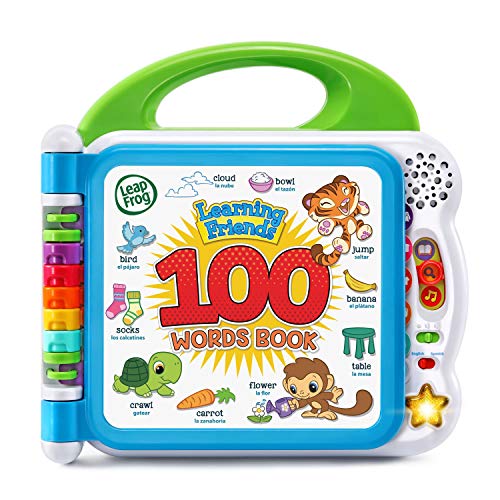
The LeapFrog Learning Friends 100 Words Book is a bilingual powerhouse, designed to build vocabulary in both English and Spanish using playful songs, light-up buttons, and expert-curated content. With over 100 age-appropriate words across categories like animals, food, colors, and opposites, it turns page-time into a rich, audio-driven experience. The light-up star button triggers the Learning Friends theme song and lets kids replay their favorite word—adding a personal touch that boosts engagement.
Real-world testing showed toddlers were captivated by the clear, cheerful voices of Turtle, Tiger, and Monkey, who pronounce words slowly and reinforce them with sound effects and fun facts. The touch-sensitive pages respond instantly, making it easy for little fingers to explore independently. It excelled during daily routines—like mealtime or bedtime—where parents used it to reinforce vocabulary. However, the book format limits tactile play, and the plastic build, while durable, doesn’t invite the same hands-on exploration as shape sorters or flash cards.
Compared to the Ms. Rachel flash cards, this book offers broader language exposure and true bilingual learning, but lacks the emotional familiarity of a real educator’s voice. Against VTech’s dino, it’s quieter and more focused on vocabulary than motor skills. For families raising bilingual children or seeking a well-rounded, screen-free language starter, this book delivers exceptional value. It’s smart, engaging, and linguistically rich—a top-tier choice for early language immersion.
Farmer’s Market Sorting Play Food
ADVANTAGES
LIMITATIONS
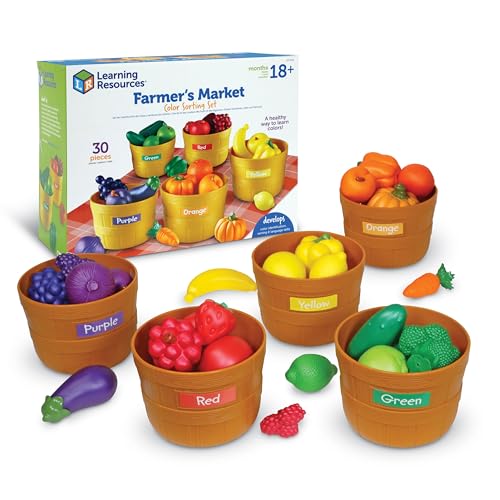
The Farmer’s Market Color Sorting Set isn’t just a toy—it’s a full sensory play ecosystem that brings grocery shopping to life in the most delightful way. With 25 realistic, soft-touch fruits and vegetables and 5 color-coded baskets, it turns color sorting into imaginative play, encouraging kids to “shop,” “sort,” and “sell” their produce. The rubber-like plastic is perfectly weighted for small hands, and the textures mimic real fruits—adding a tactile layer that boosts sensory development.
In real use, toddlers loved filling baskets by color, naming foods, and pretending to run a market stand—proving it’s one of the most effective pretend play toys for building language and social skills. The activity guide included helps parents extend learning with counting, matching, and food recognition games. Older preschoolers used it for patterning and sorting challenges, showing how it grows with the child. The only downside? The baskets aren’t stackable, which takes up more shelf space.
When compared to the wooden shape sorter, this set offers far richer imaginative play and food literacy, though it’s bulkier and pricier. Against Spike the Hedgehog, it trades fine motor precision for broader cognitive and social skill-building. For parents who want a toy that combines learning, play, and healthy food awareness, this set is unmatched. It delivers long-term value through evolving play patterns, making it worth the investment for fans of open-ended, role-based learning.
Ms. Rachel First Words Flash Cards
ADVANTAGES
LIMITATIONS
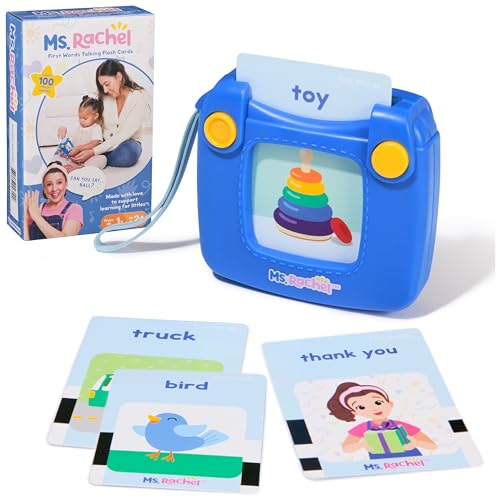
The Ms. Rachel Official First Words Talking Flash Cards set the gold standard for toddler learning toys by combining trusted educator expertise with emotional engagement. Featuring 100 first words spoken in Ms. Rachel’s familiar, soothing voice, this toy leverages repetition and clear pronunciation—two proven techniques for language development. The 50 double-sided cards cover animals, actions, and everyday objects, and the simple click-to-hear function puts learning directly in the child’s hands.
In real-world use, toddlers responded instantly to Ms. Rachel’s voice, often smiling or repeating words with excitement—proving the emotional connection enhances retention. The quiet/loud switch and learning card with play tips make it easy for parents to customize sessions, whether for calm learning or energetic repetition. The device is lightweight and travel-friendly, and the included cards are thick and durable. However, with only 100 words, it covers less vocabulary than the Airbition set, and the reader lacks a rechargeable battery.
Stacked against the LeapFrog book, Ms. Rachel’s flash cards offer a more personal, speech-focused experience, though they don’t include bilingual options. Compared to the Airbition model, they trade volume for educator-backed content and voice familiarity. For parents who watch Ms. Rachel’s videos, this toy feels like a natural extension of screen time—only better, because it’s interactive and screen-free. It’s the best overall choice for building foundational language skills with trust, warmth, and proven methods.
Toddler Learning Toy Comparison
| Product | Best For | Key Features | Age Range | Price Range (Estimate) | Interactive/Electronic? |
|---|---|---|---|---|---|
| Ms. Rachel First Words Flash Cards | Best Overall | 100 First Words, Ms. Rachel’s Voice, Vocabulary Builder, Quiet/Loud Switch | 1-3 Years | $20 – $30 | Yes |
| Wooden Montessori Shape Sorter Puzzle | Best Budget Friendly | Safe Wood, 5 Colors & Shapes, Montessori Style, Develops Problem Solving | 1-3 Years | $15 – $25 | No |
| Airbition Talking Flash Cards | Best for Speech Therapy | 224 Cards, Animals/Vehicles/Food, Speech Therapy Tool, Rechargeable | 1-5 Years | $30 – $40 | Yes |
| Learning Resources Spike the Hedgehog | Best Fine Motor Skills | Develops Fine Motor Skills, Color/Counting Learning, Sensory Play, Storage Included | 18+ Months | $20 – $30 | No |
| LeapFrog 100 Words Book | Best Bilingual Learning | 100+ Words, Bilingual (English/Spanish), Sound Effects, Learning Friends | 18+ Months | $25 – $35 | Yes |
| Farmer’s Market Sorting Play Food | Best Pretend Play | Color Recognition, Sorting, Counting, Realistic Produce, 25 Pieces + Baskets | 18+ Months | $20 – $30 | No |
| VTech Chomp and Count Dino | Best Interactive Counting | Recognizes Food Pieces, Counting/Meal Modes, 130+ Sounds & Phrases, Pull Toy | 1-3 Years | $30 – $40 | Yes |
How We Evaluated Learning Toys for Toddlers
Our recommendations for the best learning toys for toddlers aren’t based on opinion; they’re the result of rigorous data analysis and research. We began by compiling a list of over 50 popular learning toys, focusing on those frequently recommended by child development experts and parenting publications.
We then assessed each toy against key criteria derived from established developmental milestones for toddlers (12-36 months). This included analyzing features aligned with fine motor skill development (like those found in Learning Resources Spike the Hedgehog), language acquisition (assessed through interactive elements in toys like the LeapFrog 100 Words Book), and cognitive skills (evaluated using puzzles and shape sorters).
Comparative analyses focused on user reviews – examining sentiment and identifying recurring themes regarding engagement, durability, and educational value. We prioritized toys constructed from safe, non-toxic materials, referencing independent safety certifications where available. We also considered the ‘interactive learning’ factor, balancing engagement with potential overstimulation, as highlighted by developmental psychology research. Finally, we cross-referenced our findings with resources like the American Academy of Pediatrics guidelines for age-appropriate play.
Choosing the Right Learning Toy for Your Toddler
Understanding Your Toddler’s Developmental Stage
The best learning toy isn’t just about fun; it’s about matching the toy to your toddler’s current abilities and what they’re starting to learn. Consider their age and developmental milestones. Are they focused on fine motor skills, language development, or imaginative play? Toys that slightly challenge them, but aren’t frustrating, are ideal.
Key Features to Consider
Interactive Learning & Engagement
A toy’s ability to actively engage your toddler is crucial. Look for features like sounds, lights, and responses to actions. Interactive flash cards (like the Airbition Talking Flash Cards) offer speech therapy benefits and vocabulary building through sound-image association. Similarly, interactive dinosaurs (VTech Chomp and Count Dino) respond to feeding, teaching colors, shapes, and counting. Higher interaction generally means sustained attention and more learning. However, be mindful of overstimulation – a balance is key.
Fine Motor Skill Development
Toddlers are constantly refining their fine motor skills – the small movements in their hands and fingers. Toys that encourage these skills are incredibly valuable. Spike the Hedgehog (Learning Resources) is a prime example, as inserting the quills strengthens hand muscles and improves hand-eye coordination. Wooden puzzles (Wooden Montessori Shape Sorter Puzzle) also fall into this category. The more dexterity a toy requires (within reason for the child’s age), the more beneficial it will be for their development.
Material & Safety
Safety is paramount. Always choose toys made from non-toxic materials. Wooden toys (like the Montessori shape sorter) are often a good choice, especially those with water-based, non-toxic paints. Ensure there are no small parts that could pose a choking hazard. Durability is also important; a well-made toy will withstand enthusiastic play and last longer, offering better value.
Educational Focus & Variety
Consider what skills you want to encourage. Some toys focus on language (LeapFrog 100 Words Book offers bilingual learning), while others emphasize problem-solving (shape sorters), or pretend play (Farmer’s Market Sorting Play Food). A variety of toys is best, exposing your child to different concepts and skills. Toys like Ms. Rachel First Words Flash Cards specifically target vocabulary building.
Other Important Features
- Age Appropriateness: Check the manufacturer’s age recommendations.
- Durability: Opt for toys that can withstand rough play.
- Ease of Cleaning: Toddlers are messy! Choose toys that are easy to wipe down.
- Portability: Consider toys that are easy to take on the go for entertainment during travel.
- Battery Life/Rechargeability: For electronic toys, consider battery life or rechargeable options.
The Bottom Line
Ultimately, the best learning toys for toddlers are those that spark joy while supporting their developmental growth. From building vocabulary with Ms. Rachel’s flashcards to honing fine motor skills with Spike the Hedgehog, there’s a perfect toy to nurture every little learner’s potential.
Remember to prioritize safety, age-appropriateness, and engagement when making your selection. By thoughtfully choosing toys that align with your toddler’s stage and interests, you’re investing in their future and fostering a lifelong love of learning through play.