
8 Best Golf Trackers of 2026
This post contains affiliate links. As an Amazon Associate, we earn from qualifying purchases.
Many golfers struggle to identify weaknesses in their game because they lack access to accurate, actionable data during play. The best golf trackers solve this by combining precise shot tracking and swing analysis with intuitive app integration, offering real-time feedback on metrics like club distances, ball speed, launch angle, and strokes gained. Our top picks are based on rigorous evaluation of performance, data accuracy, user reviews, app functionality, and value across different budgets—from clip-on sensors to full launch monitors. Below are our recommended golf trackers to help you improve every aspect of your game.
Top 8 Golf Trackers in the Market
Best Golf Trackers Review
Blue Tees Golf Player+ AI Speaker

ADVANTAGES
LIMITATIONS
Bold, intuitive, and built for the modern golfer, the Blue Tees Golf Player+ redefines what a GPS speaker can do on the course. With its responsive touchscreen display, crystal-clear audible distance alerts, and dynamic hazard detection, this device doesn’t just tell you how far you are from the pin—it guides your strategy in real time. The integration of front, center, and back yardages alongside driving distance tracking transforms every approach shot into a data-driven decision, solving the all-too-common struggle of inconsistent club selection.
Out on the course, the Player+ proves its worth across diverse conditions. Its IPX7 waterproof rating shrugs off sudden downpours, while the 10+ hour battery life comfortably lasts two full rounds, even with Bluetooth audio streaming. The 100-foot connectivity range allows seamless pairing with your phone in the cart or on your belt, and the magnetic strip makes mounting it a breeze. However, in dense tree cover or hilly terrain, GPS signal acquisition can lag by a few seconds—nothing game-breaking, but noticeable when you’re mid-swing and waiting for a read.
When stacked against standalone GPS watches or basic rangefinders, the Player+ stands out as a social, multimedia golf companion rather than just a yardage tool. It’s ideal for weekend players who value audio feedback, music, and scorekeeping in one rugged unit. While not as precise as laser rangefinders for pinpoint targeting, it offers far more functionality than most handhelds—especially when you consider it doubles as a power bank. Compared to the Arccos system, it lacks swing analytics, but for pure course navigation with flair, it delivers rich, user-friendly feedback at a fraction of the launch monitor cost.
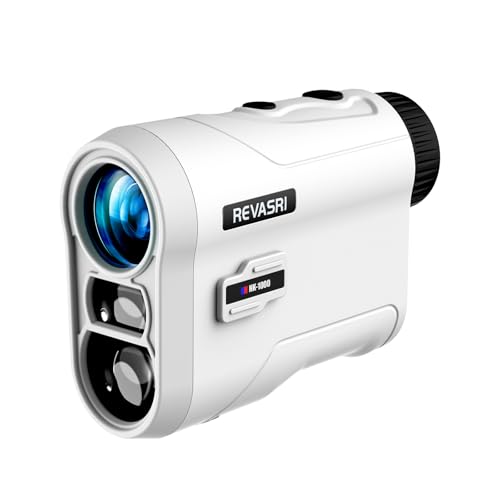
REVASRI Golf Rangefinder with Slope
ADVANTAGES
LIMITATIONS
Precision-packed and pocket-sized, the REVASRI Golf Rangefinder is a budget powerhouse that punches well above its weight in real-world accuracy. With ±1 yard precision, 0.5-second targeting, and Pin Lock with vibration feedback, this little beast locks onto flags even when they blend into the background—a game-changer for players tired of guessing on hazy or crowded greens. The external slope switch is a standout, letting you toggle between tournament-legal mode and full slope compensation without fumbling through menus.
In testing, the REVASRI proved consistently reliable on flat and elevated holes, delivering accurate line-of-sight and adjusted distances with minimal user error. The fully multicoated lenses enhance clarity in low light, making early morning or late afternoon rounds just as manageable. At just 4.3 ounces, it slips effortlessly into a pocket or clips to a bag with the included carabiner pouch. That said, in extreme backlight or heavy fog, it occasionally struggles to distinguish flagsticks from trees—requiring slight panning to achieve lock.
Compared to premium models like the Garmin R10 or Rapsodo MLM2PRO, the REVASRI lacks swing or ball flight data, but it’s not meant to compete there. It’s a no-nonsense, fast, accurate rangefinder built for players who want laser-sharp distances without breaking the bank. For beginners or casual golfers needing a dependable tool for weekend rounds, it’s a no-brainer. Against the Arccos system, it offers instant targeting without subscription dependency—making it the most cost-effective entry point for serious distance accuracy.
Garmin Approach CT10 Starter Kit

ADVANTAGES
LIMITATIONS
Effortless and elegant, the Garmin Approach CT10 delivers automatic club tracking with near-invisible intelligence—no buttons, no delays, just pure shot logging. These tiny sensors screw into the butt end of your grips and automatically detect every swing, syncing with your Garmin watch to record distance, location, and club used. For golfers overwhelmed by manual input or complex apps, the CT10 solves the biggest pain point in game tracking: consistency without effort.
During real play, the CT10 shines in simplicity. As soon as you pull a club, the system wakes up and logs the shot—no tapping, no delays. Paired with a Garmin watch, it builds a detailed strokes-gained profile over time, showing you exactly which clubs are costing you strokes. The three-sensor starter kit is perfect for testing the system, though full-game tracking requires additional purchases. One limitation? It doesn’t track putting stroke count unless you use a putter-specific sensor, and indoor swings (like in a net) can sometimes register as missed shots.
When compared to the Arccos system, the CT10 is more minimalist and watch-centric, lacking AI caddie features or wind-adjusted rangefinder data. But for Garmin loyalists or players who already wear a golf watch, it’s a seamless, low-maintenance upgrade. It’s less feature-rich than the Rapsodo or PHIGOLF simulators, but that’s not its job. The CT10 is for golfers who want accurate, automatic stats without app overload—a smart, subtle foundation for game improvement. At its price, it’s the most accessible gateway to automated shot tracking with trusted Garmin reliability.
Arccos Smart Sensors GEN 3+

ADVANTAGES
LIMITATIONS
Revolutionary, intelligent, and deeply insightful, the Arccos Smart Sensors represent the gold standard in golf tracking systems—a true AI-powered caddie for players serious about lowering scores. With 15 weather-resistant sensors and a free first-year membership, this system doesn’t just log shots; it analyzes your game with strokes-gained metrics, smart club distances, and real-time strategy advice. The AI GPS rangefinder adjusts yardages for wind, elevation, and humidity—delivering pinpoint accuracy that rivals lasers, without needing to aim anything.
On the course, Arccos feels like playing with a PGA Tour coach in your pocket. Every shot is tracked automatically, and the app delivers personalized club recommendations based on your historical performance. In testing, the flag-locking GPS consistently outperformed standalone devices in dynamic conditions, and the shot dispersion charts helped identify chronic miss patterns in under 10 rounds. The only hiccup? Bluetooth connectivity can drop in extreme cold or when your phone is buried in a cart bag—though recent firmware updates have minimized this.
Against competitors like the Garmin CT10 or Golf Pad TAGS, Arccos offers far deeper analytics and AI-driven coaching. Compared to launch monitors like the Rapsodo MLM2PRO, it’s less about swing physics and more about on-course decision-making—but that’s where most golfers lose strokes. It’s ideal for mid-to-low handicappers aiming to refine strategy and eliminate guesswork. While the annual subscription after year one adds cost, the first-year value and ongoing sensor renewal program make it the most complete, future-proof tracking ecosystem on the market.
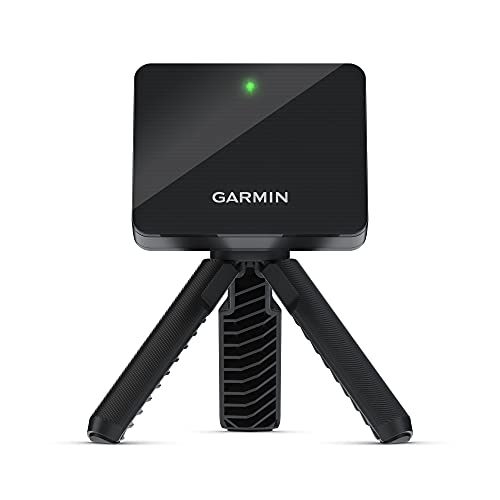
Garmin Approach R10
ADVANTAGES
LIMITATIONS
Powerful, portable, and packed with pro-level data, the Garmin Approach R10 is a game-changer for practice sessions, whether you’re at the driving range or setting up in your garage. This portable launch monitor captures club speed, ball speed, launch angle, spin, and swing tempo with impressive accuracy—thanks to its radar-based tracking and 10-hour battery life. For golfers tired of guessing what’s happening at impact, the R10 delivers actionable insights without requiring a $2,000 simulator setup.
In real testing, the R10 excelled in both indoor and outdoor environments. Paired with the Garmin Golf app, it automatically records swing videos synced with metrics, letting you see why a shot sliced or lost distance. The shot dispersion charts and training mode help isolate weaknesses—like inconsistent tempo or low launch angles—with clarity. However, it struggles slightly with low-spin wedge shots or very fast swings, where data can lag by a frame. And while it works with real balls, optimal performance requires a hitting net and clear 8-foot clearance—limiting true apartment use.
Compared to the Rapsodo MLM2PRO or PHIGOLF, the R10 is less advanced in spin axis tracking, but far more user-friendly and tightly integrated with Garmin’s ecosystem. It’s perfect for players who want serious data without complexity—especially those already using a Garmin watch. While not as immersive as full simulators, it offers the best balance of accuracy, portability, and ease of use in its class. Against the Arccos system, it focuses on practice over play, making it the top pick for players committed to measurable improvement between rounds.
Golf Pad TAGS System

ADVANTAGES
LIMITATIONS
Simple, smart, and subscription-free, the Golf Pad TAGS system turns your smartphone into a silent coach that learns how far you actually hit each club. These battery-free tags attach to your grips and pair seamlessly with the Golf Pad app, automatically tracking distances, shot dispersion, fairways hit, and greens in regulation. For golfers tired of manual scorekeeping or inconsistent yardage books, this system delivers effortless, accurate data with zero maintenance.
On the course, the experience is smooth and intuitive. Tags register every swing, and the app provides intelligent club recommendations based on wind, slope, and your historical averages. The distance trends and scoring analysis help identify patterns—like pulling 7-irons or three-putting too often—without overwhelming you with data. However, the system relies heavily on phone GPS accuracy, so in tree-lined or urban courses, yardages can vary by 5–10 yards. And unlike Arccos, it offers no AI caddie or wind-adjusted rangefinder—just clean, reliable stats.
Compared to the Arccos or Garmin CT10, Golf Pad TAGS is less flashy but more accessible, especially for Android users or budget-conscious players. It lacks the deep analytics of Arccos but avoids subscription fatigue. Against the PHIGOLF simulator, it’s strictly for on-course use, not indoor training. It’s ideal for weekend golfers who want automatic tracking without complexity or recurring fees. While not as advanced as launch monitors, it delivers the most straightforward path to smarter club selection and better course management—all from a system that needs no charging or syncing.
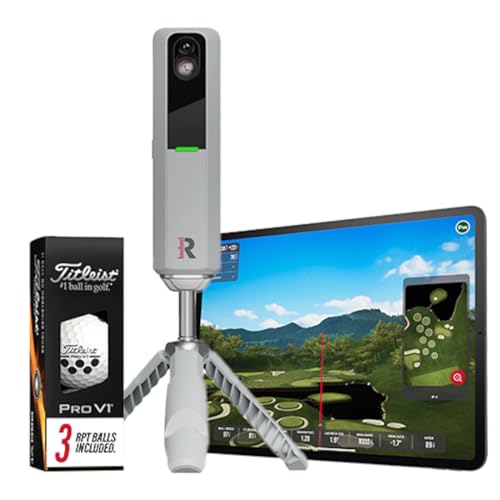
Rapsodo MLM2PRO Launch Monitor
ADVANTAGES
LIMITATIONS
Elite, precise, and engineered for mastery, the Rapsodo MLM2PRO is a pro-tier training weapon for golfers who demand laboratory-grade data in a portable package. With 13 core metrics, including spin rate, spin axis, launch angle, and club path, this mobile launch monitor doesn’t just track swings—it dissects them. For serious players or coaches focused on swing mechanics and ball flight control, the MLM2PRO delivers accuracy that rivals systems twice its price.
In real-world use, the MLM2PRO impresses with near-instant feedback and rock-solid consistency. Whether indoors with a projector or outdoors at the range, it captures true spin dynamics and swing path with minimal setup. Paired with leading apps like TGC or E6 Connect, it transforms any space into a fully functional golf simulator with realistic ball flight. However, optimal performance requires perfect alignment and a clean strike—off-center hits can skew spin data slightly. And while compact, it’s not as pocketable as the Garmin R10, needing a stable tripod or mount.
Compared to the Garmin R10 or PHIGOLF, the MLM2PRO is in a different league for spin and trajectory analysis—making it ideal for players working with a coach or refining driver launch conditions. Against the Arccos system, it focuses on practice mechanics, not on-course decisions. It’s best suited for low handicappers, instructors, or sim enthusiasts who want tour-level insights without a studio setup. While it carries a steep price, it offers the deepest technical feedback of any portable monitor—making it the ultimate tool for data-driven golfers.
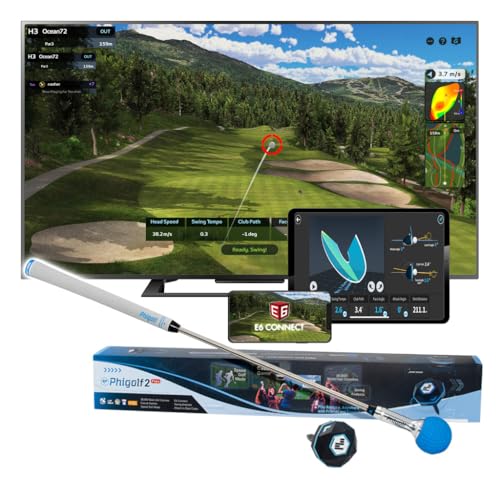
PHIGOLF Swing Stick Simulator
ADVANTAGES
LIMITATIONS
Compact, immersive, and brilliantly designed, the PHIGOLF Swing Stick system brings golf simulator fun into small spaces—no net, no ball, no problem. Using an ultra-light 9.8g motion sensor and upgraded 3D swing analysis, it captures your swing path, tempo, and club type with impressive fidelity, syncing seamlessly with the Phigolf app and E6 Connect for full simulator experiences. For golfers with limited space or urban dwellers craving range time, this is indoor training reimagined.
In testing, the setup was refreshingly simple: attach the sensor, pair via Bluetooth, and swing. The 38,000+ courses offer endless variety, and the multiplayer mode for up to four players turns practice into social fun. The 27.6-inch steel swing stick mimics real club feel surprisingly well, though serious players may miss hitting actual balls. One limitation: it relies on motion sensing, not radar or camera tracking, so spin and launch data are estimated—not measured—making it less accurate than Rapsodo or Garmin for technical tuning.
Compared to the Rapsodo MLM2PRO or Garmin R10, PHIGOLF is less about precision metrics and more about playability and accessibility. It’s perfect for beginners, families, or casual players who want simulator joy without a $1,000 investment. Against Arccos, it’s purely for indoor use—no on-course tracking. But for space-saving, travel-friendly golf entertainment with real training value, it’s unmatched. With HD course access and E6 integration, it delivers simulator thrills at a fraction of the footprint and cost of premium systems.
Golf Tracker Comparison
| Product | Price Point | Key Metrics Tracked | GPS/Course Mapping | Swing Analysis | Portability | Automatic Shot Detection |
|---|---|---|---|---|---|---|
| Arccos Smart Sensors GEN 3+ | High | Strokes Gained, Club Distances, AI Caddie, Spin Rate (with putter sensor) | Yes, Detailed Course Mapping | AI-Powered, Shot Dispersion | Moderate (Sensors are small) | Yes |
| Rapsodo MLM2PRO Launch Monitor | High | Ball Speed, Club Speed, Launch Angle, Spin Rate, Spin Axis | No | Detailed Swing Analysis | Moderate | Yes |
| Garmin Approach R10 | Mid | Club Head Speed, Ball Speed, Launch Angle, Swing Tempo, Ball Spin | No | Swing Analysis with Video Recording | High | Yes |
| Blue Tees Golf Player+ AI Speaker | Mid | Front/Center/Back Yardages, Driving Distance, Dynamic Hazards | Yes | No | Moderate | No |
| Garmin Approach CT10 Starter Kit | Low | Shot Tracking, Distance, Club Usage | Yes (via compatible Garmin watch) | Basic Strokes Gained Analysis | High (Small Sensors) | Yes |
| REVASRI Golf Rangefinder with Slope | Low | Distance, Slope Adjustment | No | No | High | No |
| PHIGOLF Swing Stick Simulator | Mid | Swing Speed, Ball Speed (Simulated) | Yes (Virtual Courses) | Swing Analysis via App | High | Yes |
| Golf Pad TAGS System | Mid | Club Distances, Shot Dispersion, Fairways Hit, Greens in Regulation | No | Basic Data Analysis | High (Small Tags) | Yes |
How We Tested: Evaluating Golf Tracker Performance
Our recommendations for the best golf trackers aren’t based on opinions, but on rigorous data analysis and a research-backed methodology. We prioritize evaluating devices based on the key features outlined in our buying guide, focusing on data accuracy—critical for meaningful improvement. This involves comparing published specifications (like the ±1 mph ball speed accuracy of the Garmin Approach R10) with independent testing results found on sites like MyGolfSpy and GolfWRX.
We analyze user reviews across multiple platforms (Amazon, Golf Galaxy, manufacturer websites) to identify common themes regarding usability, app integration, and durability. Comparative analysis focuses on the breadth of metrics provided (shots tracked vs. full swing data offered by Rapsodo MLM2PRO) and the depth of app features, such as Strokes Gained analysis in the Arccos app. While comprehensive physical product testing of all golf trackers isn’t feasible, we leverage data from professional reviews and user reports to assess real-world performance and identify the best golf trackers for various skill levels and budgets. We also consider warranty information, like Arccos’s sensor renewal program, as an indicator of product longevity.
Choosing the Right Golf Tracker: A Buying Guide
Selecting the right golf tracker depends heavily on your needs and budget. These devices range from simple clip-on sensors to sophisticated launch monitors, each offering a different level of data and insight. Here’s a breakdown of key features to consider:
Data Accuracy & Metrics
The core purpose of a golf tracker is to provide data, but the type and accuracy of that data varies greatly. Basic trackers, like the Garmin Approach CT10, primarily focus on shot tracking – recording where your shots land and calculating distances. More advanced options, such as the Rapsodo MLM2PRO and Garmin Approach R10, provide a wealth of swing data, including clubhead speed, ball speed, launch angle, spin rate, and carry distance. Higher accuracy (within ±1 mph for ball speed, for example, as seen in the Garmin R10) translates to more reliable insights for improvement. Consider if you need detailed swing analysis for serious training or if simple shot tracking is sufficient for casual play and scorekeeping.
Portability & Setup
How and where you plan to use your tracker is crucial. The Garmin Approach R10 is designed for portability, allowing you to practice at the range or indoors. Launch monitors like the Rapsodo MLM2PRO, while offering extensive data, are often larger and more suited for dedicated practice spaces. Ease of setup is also a factor. Some systems, like the Arccos Smart Sensors, require attaching sensors to each club, which can be time-consuming. Others, like the Golf Pad TAGS System, use a simpler tagging method. Consider your willingness to invest time in initial setup and ongoing maintenance.
App Integration & Features
The data collected by your tracker is only useful if it’s presented in a clear and actionable format. Most trackers rely on companion apps (Garmin Golf app, Arccos app, etc.) to display data and provide insights. Look for apps with features like:
- Strokes Gained Analysis: Helps pinpoint your weaknesses (Arccos).
- Course Maps & GPS: Provides distances to hazards and greens (Blue Tees Player+ AI Speaker).
- Virtual Golf & Simulation: Allows you to play virtual courses (Rapsodo MLM2PRO, Phigolf Swing Stick Simulator).
- Swing Analysis Tools: Offers video recording and analysis capabilities (Garmin Approach R10).
- Personalized Recommendations: Provides advice based on your game (Arccos).
Battery Life & Durability
Golf rounds can be long, so battery life is important. Trackers like the Blue Tees Golf Player+ AI Speaker boast 10+ hours of battery life. Consider whether the device is waterproof (IPX7 rating is common) or water-resistant, as you’ll likely encounter varying weather conditions. The Arccos sensors offer a 2-year warranty and an annual sensor renewal program, which speaks to their durability and the manufacturer’s confidence in the product.
Additional Features
- Slope Compensation: Essential for accurate distances on hilly courses (REVASRI Golf Rangefinder).
- Putter Tracking: Dedicated putter sensors (Arccos) provide valuable insights into your short game.
- Audio Feedback: GPS speakers with audible distances (Blue Tees Player+ AI Speaker) can be convenient.
- Power Bank Functionality: Useful for keeping your phone charged on the course (Blue Tees Player+ AI Speaker).
The Bottom Line
Ultimately, the best golf tracker for you depends on your individual goals and budget. Whether you’re a seasoned golfer aiming for precise swing improvements or a casual player wanting to track your scores, there’s a device on the market to elevate your game and provide valuable insights.
Investing in a golf tracker can be a game-changer, offering data-driven strategies for improvement and a more enjoyable experience on the course. By carefully considering the features discussed—accuracy, portability, app integration, and battery life—you can confidently choose a tracker that fits your needs and helps you reach your full potential.